“Botox” has become shorthand for anti-wrinkle injections, so recognisable that it stands in for an entire category of treatment. But behind the household name sits a prescription-only medicine with a specific mechanism, a defined set of uses, real limitations and, in the UK, a fast-tightening set of rules. This guide explains what botulinum toxin actually does, what it can and cannot achieve, and — just as importantly — the questions that help you tell a safe, properly regulated clinic from a risky one.
What Botox actually is
Botox is a brand name for botulinum toxin type A, a purified protein used in tiny, carefully measured doses. Several brands are licensed in the UK — you may also see Azzalure, Bocouture and Dysport — and a qualified prescriber chooses between them. Because it is a prescription-only medicine (POM), it is not something that can be advertised or sold to the public like a cosmetic; it can only be prescribed after a proper clinical assessment. This article is therefore educational: it is here to help you understand the treatment, not to promote or supply it.
The way it works is elegantly simple. A muscle contracts when a nerve releases a chemical messenger called acetylcholine. Botulinum toxin temporarily blocks that release, so the treated muscle receives no “contract” signal and relaxes. When a muscle beneath the skin stops creasing so forcefully, the lines it produces on the surface soften. The effect is a temporary, reversible relaxation — nerves gradually recover over the following months, and movement returns.
Which lines it can — and cannot — treat
This is the single most important distinction to grasp, because it sets realistic expectations. Botulinum toxin only works on dynamic wrinkles — the lines that appear when you make an expression. It does little or nothing for static wrinkles, which are etched in by years of sun damage and collagen loss and are visible even when your face is at rest, nor does it address volume loss or sagging skin.
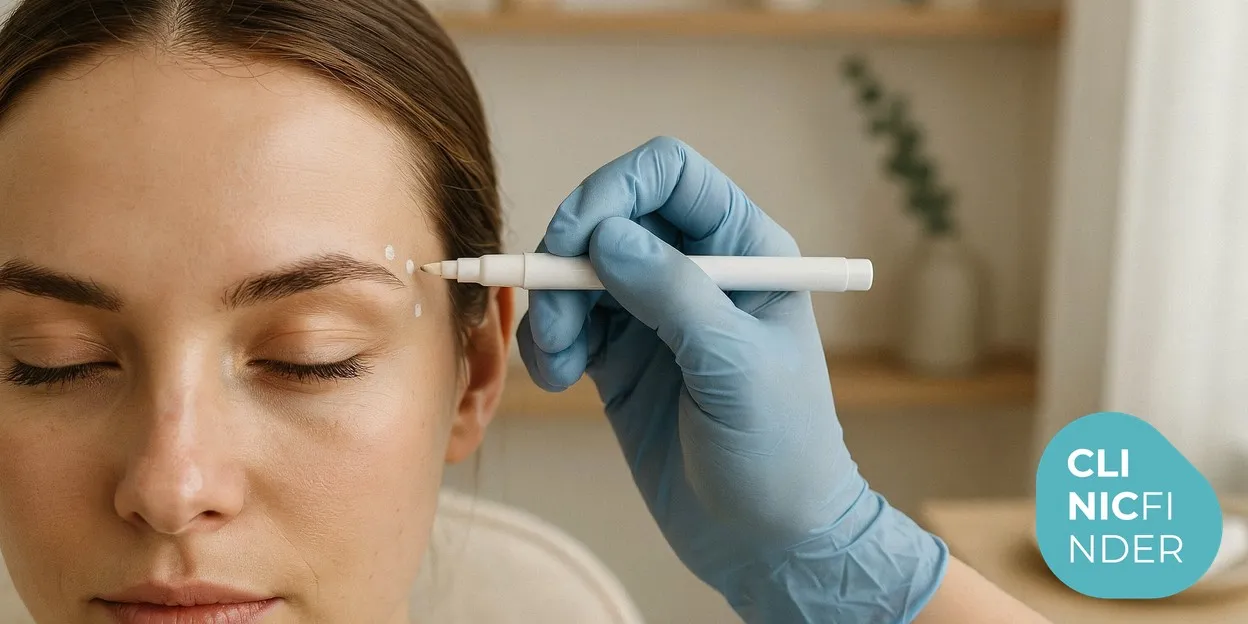
The areas most commonly discussed include:
- Frown lines — the vertical “elevens” between the eyebrows (this is the use botulinum toxin is specifically licensed for in the UK; most other areas are treated off-label but are standard aesthetic practice)
- Forehead lines — the horizontal lines across the brow, where careful, conservative dosing matters to avoid a heavy or dropped brow
- Crow’s feet — the lines fanning out from the outer corners of the eyes
- Smaller, more specialised uses such as a subtle brow lift, “bunny lines” on the nose, softening downturned mouth corners, jaw slimming for people who clench or grind, and a “lip flip”
If your main concern is deep, permanent creases, lost cheek volume or loose skin, toxin alone is unlikely to be the answer — and an honest practitioner will tell you so, sometimes pointing towards other options such as those covered in our complete guide to dermal fillers or the broader landscape in our roundup of the best non-surgical anti-ageing treatments.
What results are realistic — and how long they last
Nothing happens on the day. The effect typically begins to appear within three to seven days, reaches its peak at around 10 to 14 days, and then holds before gradually fading. Most people find the result lasts three to four months, occasionally up to six, depending on the dose, the strength of the muscle treated and how quickly their body metabolises the toxin. Stronger muscles — the jaw muscles, for example — often wear off sooner.
Because the effect is temporary, maintaining the look means repeating the treatment a few times a year. That is worth factoring into your thinking from the start: this is an ongoing commitment, not a one-off fix.
A good clinic will usually offer a review at around two weeks, once the full effect has settled, to check the result and make any small adjustments. Booking that appointment before the result has developed is normal and sensible.
Because the effect fades, an unwanted outcome is not permanent — a reassuring feature compared with more lasting treatments. But it also means the “frozen” appearance some people fear is avoidable with good technique. The prevailing ethos in UK clinics now is deliberately restrained: a movement-preserving approach, sometimes marketed as “baby Botox”, that softens lines while leaving enough muscle activity for natural expression. This is partly a response to a genuine consumer backlash against the overly “done” look.
Preventative Botox: what the evidence really says
You may have seen “preventative Botox” discussed — the idea of starting in your twenties or early thirties, before dynamic lines settle into permanent creases. The theory is that reducing repetitive muscle movement early could slow the process by which an expression line becomes etched in.
It is worth being honest here, because this is where marketing tends to run ahead of the evidence. Most robust clinical data on botulinum toxin concerns treating wrinkles that are already visible; there is far less long-term trial evidence for population-wide preventative use in people who have no lines yet. It is a reasonable theory and a popular trend, but it is largely anecdotal rather than proven, and it deserves a sceptical, unhurried conversation with a qualified clinician rather than a rushed decision. We explore this in more depth in our guide to preventative aesthetics in your 30s.
Side effects and who it is not for
For most people, side effects are mild and short-lived: redness, minor swelling or a small bruise at the injection points, and sometimes a mild headache in the days afterwards. These usually settle within a week or two.
Less commonly, the toxin can spread slightly into a muscle it was not meant to affect, causing a temporary droopy eyelid or brow, or some asymmetry. These are unsettling but not permanent — they resolve as the effect wears off, typically over a few weeks — and skilled placement makes them far less likely. This is one clear reason technique and training matter.
Botulinum toxin is not suitable for everyone. It should be avoided in pregnancy and breastfeeding, in people with certain neuromuscular conditions such as myasthenia gravis, where there is an allergy to any ingredient, or where there is an active skin infection at the injection site. And under the Botulinum Toxin and Cosmetic Fillers (Children) Act 2021, it is a criminal offence to provide it for cosmetic purposes to anyone under 18. Any medical questions about your own suitability should go to a suitably qualified prescriber, who can assess you properly.

What to ask your practitioner
Because botulinum toxin is a medicine, the standard of the person treating you matters more than almost anything else. UK regulation is tightening quickly: from June 2025 nurse and pharmacist prescribers must carry out a face-to-face consultation before prescribing (remote prescribing is no longer permitted), and the government has confirmed a new local authority licensing system for treatments including Botox, with a public consultation underway. The MHRA has also been cracking down on illegal and counterfeit supply.
One gap the new rules are designed to close is worth understanding today: as the law currently stands, while only a registered prescriber can prescribe the toxin, the person injecting it does not yet legally have to be a registered healthcare professional. That makes your own due diligence essential. Before you book, it is reasonable to ask:
- Who will prescribe it, and who will inject it? Are they the same person, and what are their medical qualifications and registration?
- Will I have a proper face-to-face consultation with the prescriber before any treatment?
- Is the product a genuine, licensed brand, and how is it stored and handled?
- What are the realistic results, the risks, and the plan if something is not right — is a two-week review included?
- Where is the clinic registered, and does it meet local licensing and insurance requirements?
A trustworthy practitioner will welcome these questions, never pressure you, and be candid about what the treatment cannot do.
Making an informed choice
Botox is a well-established, well-studied treatment that can genuinely soften dynamic expression lines — but only within real limits. It is temporary, it does nothing for sun-damage lines or lost volume, it carries side effects, and it is a prescription-only medicine that demands a proper assessment. Go in with clear expectations and, above all, the right practitioner, and it is far more likely to be a positive experience.
Use Clinic Finder to compare accredited clinics near you, check that your prescriber and injector are properly qualified and registered, and satisfy yourself that the clinic meets current UK regulations before you commit. The technology is the easy part; the person holding the needle, and the assessment behind it, are what matter most.